Water Features
Water features are decorative elements in landscaping and outdoor design that incorporate water into the overall aesthetic of a space. They can range from small fountains and ponds to elaborate waterfalls and streams. Water features add a sense of tranquility, beauty, and movement to outdoor environments. Here are some common types:
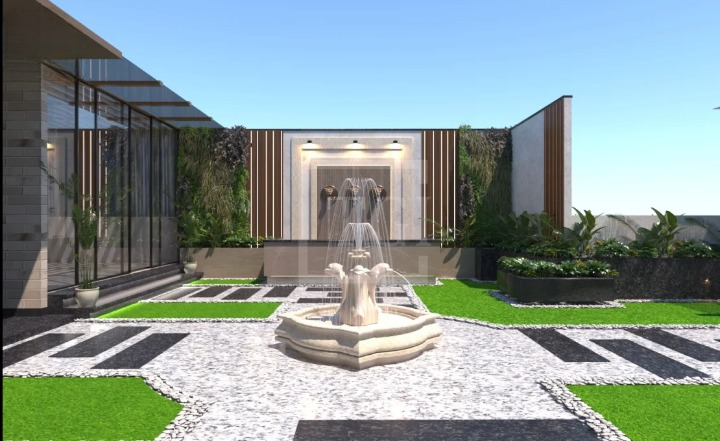
- Fountains: Fountains come in various sizes and styles, featuring flowing water and often include sculptures or artistic elements.
- Ponds: Ponds are bodies of water that can be created in different shapes and sizes, enhanced with features like bridges and aquatic plants.
- Waterfalls: Cascades of water, natural or man-made, used to create visually striking and soothing effects in combination with ponds and streams.
- Streams: Artificial streams winding through gardens, providing movement and the soothing sound of running water.
- Birdbaths: Shallow basins designed to attract birds, elevated or ground-level.
- Wall Fountains: Mounted on walls, featuring sculptural or decorative elements, popular indoors and outdoors.
- Spas and Hot Tubs: Incorporating heated water for relaxation, often with jets and various features.
- Reflecting Pools: Shallow, still pools creating reflections of surrounding landscapes or architecture.
- Rain Chains: Decorative alternatives to downspouts, channeling rainwater through linked cups or chains, creating sound and visual effects.
- Water Walls: Vertical installations where water flows down flat surfaces, often glass or stone, creating serene and modern aesthetics.
• Step-by-Step Process :
- Site Selection and Assessment: Assess the space for water feature placement, considering sunlight, accessibility, and aesthetics.
- Design and Planning: Determine the type, size, and style of water feature based on the site assessment and desired aesthetic.
- Materials and Components: Select materials such as stone, concrete, or glass for the water feature, ensuring compatibility with the design.
- Excavation: Prepare the site by excavating the area according to the planned dimensions of the water feature.
- Plumbing and Electrical Work: Install plumbing lines and electrical components if the water feature requires pumps, filters, or lighting.
- Rock and Stone Placement: Arrange rocks and stones around the water feature to enhance its natural appearance and integrate it with the landscape.
- Water Pump and Filtration System: Install and test the water pump and filtration system to ensure proper circulation and water quality.
- Water Circulation and Aeration: Ensure proper water circulation and aeration to maintain water quality and prevent stagnation.
- Planting (for Natural-Looking Features): Add aquatic plants or landscaping around the water feature to enhance its natural beauty and attract wildlife.
- Final Touches: Complete the installation with final adjustments, including filling the feature with water, adjusting flow rates, and adding finishing touches like decorative elements.

.png)
.png)
.png)
.png)
.png)